

Legal Help Hub
Drunk in Charge vs Drink Driving UK: What’s the Legal Difference?






Introduction
Alcohol-related motoring offences are taken extremely seriously in England and Wales. Many people are familiar with the offence of drink driving, but fewer realise that it is also possible to commit an offence without actually driving the vehicle.
The law distinguishes between drink driving and being drunk in charge of a vehicle. Although both offences involve being over the legal alcohol limit, they are legally distinct and carry different penalties.
Understanding the difference is important if you are facing an allegation or investigation involving alcohol and driving.
What Is Drink Driving Under UK Law?
Drink driving is formally known as driving or attempting to drive with excess alcohol.
This offence is created by Section 5 of the Road Traffic Act 1988, which makes it illegal to drive or attempt to drive a motor vehicle on a road or public place while over the prescribed alcohol limit.
For the offence to be proven, the prosecution must show that:
- You were driving or attempting to drive, and
- Your alcohol level exceeded the legal limit.
The courts treat drink driving as a serious motoring offence due to the risks posed to public safety.
According to UK law, drivers over the legal limit may face penalties including disqualification from driving, fines and, in more serious cases, imprisonment.
What Does “Drunk in Charge of a Vehicle” Mean?
The offence of being drunk in charge of a vehicle is slightly different.
Instead of driving the vehicle, the allegation is that you were in charge of it while over the legal alcohol limit.
This offence is also contained within the Road Traffic Act 1988 and applies when the prosecution believes there was a realistic possibility that you might drive while still over the limit.

When Are You Considered “In Charge” of a Vehicle?
There is no single definition of being “in charge” of a vehicle. Courts consider the circumstances of each case.
Factors that may be relevant include:
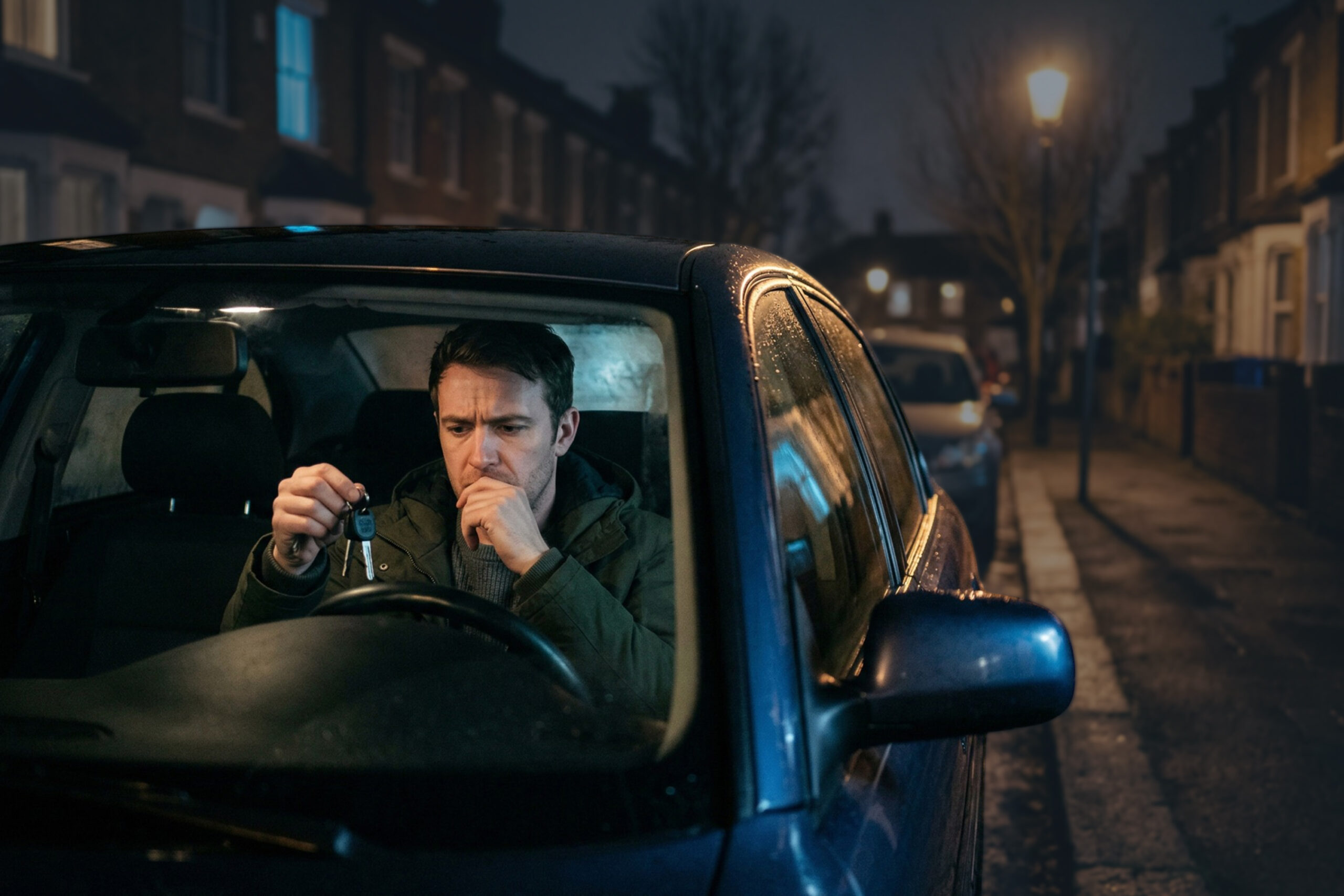
- Whether you had possession of the car keys
- Whether you were inside the vehicle
- Whether the engine was running
- Where the vehicle was located
- Whether there was a realistic likelihood you would drive
The prosecution does not need to prove you actually drove the vehicle.
Instead, they must show there was a real possibility that you could have driven while still over the legal limit.
Examples of Drunk in Charge Situations
Common situations that may lead to this charge include:
- Sitting in the driver’s seat while intoxicated
- Sleeping in a car while holding the keys
- Sitting in a parked car with the engine running
- Being near the vehicle with the keys and intending to drive later
Many people are surprised to discover that sleeping in a car after drinking can still lead to prosecution if the court believes you might have driven.
Legal Alcohol Limits in England and Wales
In England and Wales, the prescribed alcohol limits are:
- 35 micrograms of alcohol per 100 millilitres of breath
- 80 milligrams of alcohol per 100 millilitres of blood
- 107 milligrams of alcohol per 100 millilitres of urine
If a driver exceeds these limits, they may be prosecuted for either:
- Drink driving, or
- Being in charge of a vehicle with excess alcohol.
These limits are established under UK road traffic legislation and are enforced through roadside breath testing and evidential testing procedures.
Penalties for Drink Driving vs Drunk in Charge
Although the offences are related, the penalties differ.
Drink Driving Penalties
If convicted of drink driving, the court may impose:
- A mandatory driving ban of at least 12 months
- An unlimited fine
- Up to six months’ imprisonment
- A criminal conviction on your record
Repeat offenders face significantly longer disqualification periods.
Drunk in Charge Penalties
Being drunk in charge usually carries less severe penalties, although the consequences are still serious.
The court may impose:
- up to 10 penalty points
- a fine
- a discretionary driving ban
- up to three months’ imprisonment
The court will assess the circumstances carefully when deciding on the appropriate sentence.
Facing Legal Issue?
Regain peace of mind and balance in your life by contacting us now for a consultation with our Motoring Offences specialist.
Strictly Confidential and No Obligation
Possible Defences to Drink Driving and Drunk in Charge Charges
Every case is different, but there are several potential defence strategies depending on the circumstances.
No Likelihood of Driving
In drunk-in-charge cases, a common defence is proving that there was no realistic possibility of driving while over the limit.
This may involve demonstrating that:
- you intended to remain where you were until sober
- someone else was responsible for the vehicle
- you had no intention of driving at all.
Procedural Errors
Drink driving investigations must follow strict procedures.
If the police fail to comply with legal requirements when conducting breath, blood or urine tests, the evidence may be challenged.
Inaccurate Test Results
Breathalyser or laboratory results may sometimes be inaccurate.
Expert evidence can be used to assess whether the testing process was reliable.
The “Hip Flask” Defence
This defence arises where alcohol was consumed after driving but before providing a specimen.
If proven, it may show that the driver was not over the legal limit at the time they were driving.
Because these cases often involve technical legal issues, careful preparation and analysis of the evidence is essential.
Why Legal Advice Is Important for Motoring Offences
Allegations involving alcohol and driving can have serious consequences.
A conviction may affect:
- Your ability to drive
- Employment opportunities
- Professional licences
- Insurance costs
- International travel
Motoring offence cases frequently involve complex legal and procedural issues, including evidential requirements and statutory defences.
Early legal advice can help ensure that the evidence is carefully reviewed and that your case is properly presented before the court.
If you are facing an allegation involving drink driving or being drunk in charge of a vehicle, seeking advice from experienced motoring offence solicitors can help you understand your legal position and the options available.
5 Key Takeaways
- Drink driving occurs when a person drives or attempts to drive a vehicle while over the legal alcohol limit.
- Drunk in charge applies when someone is over the legal limit and in control of a vehicle, even if they are not driving it.
- Drink driving carries mandatory disqualification from driving, whereas drunk in charge usually results in penalty points or a discretionary ban.
- Courts consider whether there was a realistic possibility that the person could drive while still over the limit.
- Both offences arise under the Road Traffic Act 1988 and are treated as criminal offences.
Frequently Asked Questions
Drink driving involves actually driving or attempting to drive while over the legal alcohol limit. Drunk in charge means being over the limit while in control of a vehicle, even if you are not driving.
Yes. The prosecution only needs to show that you were over the limit and there was a realistic possibility you could have driven the vehicle.
Penalties may include up to 10 penalty points, a fine, a discretionary driving ban, or up to three months’ imprisonment.
Sleeping in a car after drinking may still result in a drunk-in-charge charge if the court believes you could have driven while over the limit.
The limit is 35 micrograms of alcohol per 100 millilitres of breath, 80 milligrams per 100 millilitres of blood, or 107 milligrams per 100 millilitres of urine.
Yes. Drink driving is a criminal offence under the Road Traffic Act 1988 and results in a criminal record if convicted.
A driving ban is normally mandatory following conviction, although the length may vary depending on the circumstances.
Call us on 0333 009 6275. We are available to take your call 24 hours a day, 7 days a week.
You can also email us on enquiries@ashmanssolicitors.com or complete our Online Enquiry Form and we’ll be in touch soon.
Get in touch
We’ll respond within 15 minutes during office hours
Search our legal articles
Free expert guidance on criminal law, your rights, and what to expect at every stage.
Searching Legal Help Hub articles
Related insights and updates

Failing to Provide a Specimen for Analysis – Legal Advice

Drink Driving and Drug Driving Penalties in the UK

Caught Drink Driving in the UK: What Happens Next?
Using a Mobile Phone While Driving in the UK: Law, Penalties and Legal Defence

Mobile Phone Driving Law in the UK: Rules, Penalties and Legal Defences

Totting Up Ban Explained: What Happens If You Reach 12 Penalty Points?

Taking Penalty Points for Someone Else: Is It Perverting the Course of Justice?

What Happens If Your Licence Is Revoked as a New Driver in the UK?
Motoring Offence Convictions in the UK: What You Need to Know
Common Motoring Law Myths in the UK Explained
Mobile Phone Driving Laws in the UK: Rules, Penalties and Legal Defences

How to Report a Road Traffic Accident in the UK

Hip Flask Defence in Drink Driving Cases

Failure to Stop After an Accident in the UK: Law, Penalties and Legal Defence
Fail to Produce Driving Documents: Offence, Penalties and Legal Defence
Drug Driving UK: Legal Limits, Penalties and Defences

Driving Without Insurance UK Penalties: Fines, Points and Court Consequences

Driving Whilst Disqualified in the UK: Penalties, Court Process and Legal Defences
Causing Death by Dangerous Driving in the UK: Law, Sentencing and Legal Defence