

Legal Help Hub
Fail to Produce Driving Documents: Offence, Penalties & Legal
Defence







Introduction
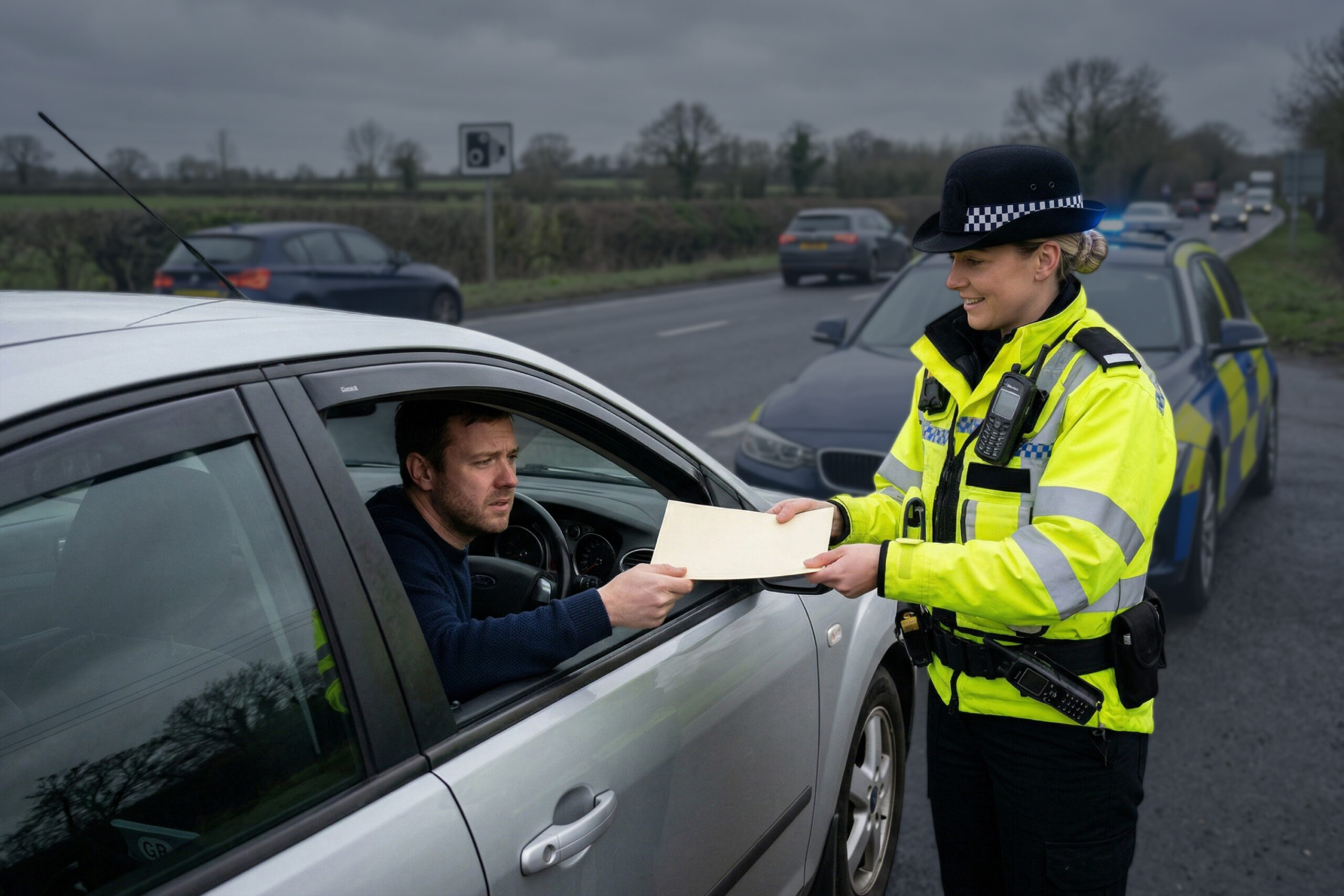
If you are stopped by the police while driving, you may be asked to show certain documents relating to your vehicle and your entitlement to drive.
Where a driver cannot produce those documents at the roadside, the police will usually issue a producer notice, requiring the documents to be presented at a police station within a specified period.
Failing to comply with that request can lead to a “fail to produce driving documents” offence, which may carry financial penalties and points on your licence.
Understanding your legal obligations and your options if you are accused of failing to comply is essential to protecting your driving licence.
What Is the Offence of Failing to Produce Driving Documents?
Under the Road Traffic Act 1988, police officers have the authority to require drivers to produce documents confirming that they are legally entitled to drive and that the vehicle is lawfully on the road.
If a driver cannot show these documents when asked, the officer may issue a formal notice requiring the documents to be produced later.
Failing to comply with this requirement can lead to prosecution for failing to produce driving documents.
What Is a HORT1 Producer Notice?
A HORT1, commonly known as a producer, is a notice issued by police officers when a driver cannot present documents during a roadside stop.
The notice will list the documents that must be produced.
The driver is normally required to attend a nominated police station within seven days to show the original documents.
The notice may require the production of:
- A driving licence
- Insurance certificate
- MOT certificate
- Other vehicle documentation
The time limit usually begins from the date the notice is issued.

Which Driving Documents Can the Police Ask For?
Police officers may request several different documents during a roadside stop.
Driving Licence
Drivers must hold a valid driving licence to operate a motor vehicle on public roads.
If the licence cannot be shown at the roadside, it must normally be produced at a police station within the time specified on the HORT1 notice.
Insurance Certificate
Motor insurance is legally required for vehicles driven on public roads.
Failure to produce valid insurance documents may lead the police to investigate driving without insurance, which carries more serious penalties.
MOT Certificate
If a vehicle is old enough to require an MOT test, a valid certificate must be held confirming that the vehicle meets safety standards.
Failure to produce an MOT certificate may lead to further investigation regarding the vehicle’s roadworthiness.
Vehicle Registration Document (V5C)
Police may also ask for the vehicle registration document, particularly where ownership or vehicle identity needs to be confirmed.
What Happens If You Fail to Produce Documents Within 7 Days?
If the requested documents are not produced within the time stated on the producer notice, the police may proceed with a prosecution for failing to produce driving documents.
In some cases, the failure to produce documents can lead officers to suspect that the driver does not have valid documentation.
This may result in further charges such as:
- Driving without insurance
- Driving without a valid licence
- Driving without an MOT
Each of these offences carries separate penalties and may significantly increase the seriousness of the case.
Penalties for Failing to Produce Driving Documents
The penalties for failing to produce documents can vary depending on the circumstances of the case.
Possible consequences include:
- A fine of up to £1,000
- Penalty points on your driving licence
- Further investigation for other motoring offences
Drivers who accumulate too many penalty points may also face a totting-up disqualification, which can lead to a driving ban.
Facing Legal Issue?
Regain peace of mind and balance in your life by contacting us now for a consultation with our Motoring Offences specialist.
Strictly Confidential and No Obligation
Possible Defences to a Fail to Produce Documents Charge
Every case depends on the specific facts and evidence involved.
Potential defences may include situations where:
- The documents were produced but administrative errors occurred
- The driver had a valid reason for not producing them within the deadline
- The notice was issued incorrectly
- The documents were in fact valid at the time of the stop
In some cases it may also be possible to demonstrate that the underlying documents were valid and that the failure to produce them was due to circumstances beyond the driver’s control.
Legal advice should always be sought before responding to allegations or accepting a fixed penalty.
How a Motoring Defence Solicitor Can Help
Motoring allegations can quickly escalate, particularly where the police suspect additional offences such as driving without insurance or without a licence.
A solicitor experienced in motoring defence can:
- Review the circumstances of the roadside stop
- Examine the legality of the producer notice
- Identify possible procedural issues
- Assess whether a defence is available
- Represent you in court if proceedings are issued
Early legal advice can be crucial in protecting your licence and minimising the impact of a prosecution.
If you have been accused of failing to produce driving documents, obtaining specialist legal advice as soon as possible can help you understand your options and prepare an effective defence.
5 Key Takeaways
- Police can request driving documents during a roadside stop or investigation.
- If the documents are not available at the roadside, you may receive a HORT1 producer notice.
- Drivers normally have seven days to produce the requested documents at a police station.
- Failing to comply may result in a fine of up to £1,000 and penalty points.
- Additional offences may be investigated if the documents reveal other issues.
Frequently Asked Questions
It refers to failing to provide requested driving documents to the police within the specified period after being issued a producer notice.
A HORT1 is a notice issued by police requiring a driver to produce certain documents at a police station within a set time.
Drivers are usually given seven days to present the documents at a nominated police station.
Yes. In the UK you are not legally required to carry them while driving, but you must produce them if requested.
You may be prosecuted for failing to produce driving documents and may face a fine or penalty points.
Yes. The police may investigate whether the driver was uninsured, unlicensed, or driving without an MOT.
In some cases insurance or MOT documents can be presented by someone else, but a driving licence may need to be produced by the driver personally.
Call us on 0333 009 6275. We are available to take your call 24 hours a day, 7 days a week.
You can also email us on enquiries@ashmanssolicitors.com or complete our Online Enquiry Form and we’ll be in touch soon.
Get in touch
We’ll respond within 15 minutes during office hours
Search our legal articles
Free expert guidance on criminal law, your rights, and what to expect at every stage.
Searching Legal Help Hub articles
Related insights and updates

Drunk in Charge vs Drink Driving UK: What’s the Legal Difference?

Failing to Provide a Specimen for Analysis – Legal Advice

Drink Driving and Drug Driving Penalties in the UK

Caught Drink Driving in the UK: What Happens Next?

Using a Mobile Phone While Driving in the UK: Law, Penalties and Legal Defence

Mobile Phone Driving Law in the UK: Rules, Penalties and Legal Defences

Totting Up Ban Explained: What Happens If You Reach 12 Penalty Points?

Taking Penalty Points for Someone Else: Is It Perverting the Course of Justice?

What Happens If Your Licence Is Revoked as a New Driver in the UK?
Motoring Offence Convictions in the UK: What You Need to Know

Common Motoring Law Myths in the UK Explained

Mobile Phone Driving Laws in the UK: Rules, Penalties and Legal Defences

How to Report a Road Traffic Accident in the UK

Hip Flask Defence in Drink Driving Cases

Failure to Stop After an Accident in the UK: Law, Penalties and Legal Defence

Drug Driving UK: Legal Limits, Penalties and Defences

Driving Without Insurance UK Penalties: Fines, Points and Court Consequences

Driving Whilst Disqualified in the UK: Penalties, Court Process and Legal Defences

Causing Death by Dangerous Driving in the UK: Law, Sentencing and Legal Defence