

Legal Help Hub
Common Driving Offences in the UK and Penalties







Introduction
Driving in the UK is governed by strict laws designed to protect all road users. When those rules are broken, drivers may face prosecution for a motoring offence.
Many road traffic offences result in penalty points, fines or even a driving disqualification. In more serious cases, offences such as dangerous driving can lead to criminal convictions and imprisonment.
Understanding the most common driving offences in the UK can help motorists recognise the potential legal consequences of their actions and the importance of seeking legal advice if they are accused of an offence.
What Is a Motoring Offence Under UK Law?
A motoring offence occurs when a driver breaches road traffic legislation while using or being in charge of a vehicle.
These offences can range from relatively minor matters, such as speeding, to very serious allegations including causing death by dangerous driving.
The law governing motoring offences is primarily contained within the Road Traffic Act 1988, which sets out offences relating to driver conduct, vehicle standards and road safety.
Motoring offences are usually dealt with in the Magistrates’ Court, although the most serious cases may be heard in the Crown Court.
How Penalty Points and Driving Bans Work
Many driving offences result in penalty points being endorsed on a driver’s licence.
The number of points depends on the seriousness of the offence.
For example:
- Minor speeding offences may carry 3 penalty points.
- More serious offences can result in 6 to 11 points.

The Totting-Up System
If a driver accumulates 12 or more penalty points within three years, they will normally face a minimum six-month driving disqualification.
This is known as the totting-up ban.
New drivers face stricter rules. If they receive 6 or more points within two years of passing their test, their licence may be revoked and they must pass their driving test again.
10 Common Driving Offences in the UK
Below are some of the most common motoring offences prosecuted in England and Wales.
Speeding Offences
Speeding is one of the most common road traffic offences in the UK.
Drivers may be issued with:
- A £100 fixed penalty
- 3 penalty points
More serious speeding offences may be prosecuted in court, where the penalties can include larger fines or a short driving disqualification.
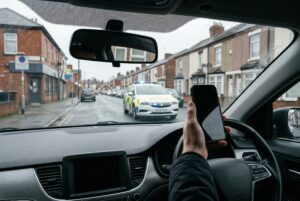
Using a Mobile Phone While Driving
It is a criminal offence to use a hand-held mobile phone while driving.
This includes texting, calling or interacting with apps while the vehicle is in use.
The usual penalty is:
- 6 penalty points
- £200 fine
In serious cases the court may impose a driving ban.
Driving Without Insurance
Driving without valid motor insurance is a serious offence.
If caught, drivers may receive:
- 6 penalty points
- £300 fixed penalty
Courts can also impose larger fines and disqualification. In some cases, vehicles may be seized by the police.
Careless Driving
Careless driving also known as driving without due care and attention occurs when a driver’s standard of driving falls below what would be expected of a competent driver.
Examples include:
- Tailgating
- Failing to observe traffic conditions
- Distractions while driving
Penalties can include 3 to 9 penalty points, fines or disqualification.
Dangerous Driving
Dangerous driving involves driving that falls far below the expected standard and creates an obvious risk of danger.
This offence is significantly more serious than careless driving and can lead to:
- Lengthy driving bans
- Unlimited fines
- Imprisonment
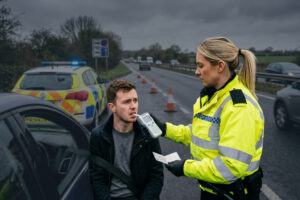
Drink Driving
Driving while over the legal alcohol limit is a criminal offence.
Penalties can include:
- A minimum 12-month driving ban
- Unlimited fines
- Imprisonment in serious cases
Drug Driving
Driving while impaired by drugs including illegal drugs or certain prescription medications is also an offence.
Drivers may face:
- Disqualification
- Fines
- A criminal record
Failing to Stop After an Accident
Drivers involved in a road traffic accident must stop and provide their details if required.
Failing to do so can lead to:
- Penalty points
- Fines
- Prosecution in court.
Driving Without a Licence
Driving without the correct licence or while disqualified is a serious offence.
Penalties can include:
- Penalty points
- Fines
- Potential imprisonment.
Failing to Identify the Driver
Vehicle owners must identify the driver of a vehicle if requested by the police following a suspected offence.
Failure to do so can result in 6 penalty points and a fine.
Facing Legal Issue?
Regain peace of mind and balance in your life by contacting us now for a consultation with our Motoring Offences specialist.
Strictly Confidential and No Obligation
What Happens If You Are Charged With a Motoring Offence?
If you are accused of a driving offence, the case may be dealt with in one of two ways:
- Fixed penalty notice
- Court summons
In court proceedings, the prosecution must prove the offence beyond reasonable doubt.
Depending on the circumstances, a driver may have a legal defence or grounds to challenge the evidence.
How a Motoring Defence Solicitor Can Help
Being accused of a motoring offence can have serious consequences, particularly if your ability to drive affects your employment or daily life.
A specialist motoring defence solicitor can:
- Review the evidence against you
- Identify potential legal defences
- Advise on likely outcomes
- Represent you in court
Early legal advice can often make a significant difference to the outcome of a case.
If you are facing a driving offence investigation or prosecution, obtaining professional legal advice at the earliest opportunity is essential.
5 Key Takeaways
- Motoring offences are governed primarily by the Road Traffic Act 1988 and related legislation.
- Many offences carry penalty points ranging from 3 to 11.
- Accumulating 12 penalty points usually results in a driving ban under the totting-up rules.
- Some offences may be dealt with by a fixed penalty notice, while more serious matters are prosecuted in court.
- A specialist motoring defence solicitor can advise on possible defences and represent you in court.
Frequently Asked Questions
The most common driving offences include speeding, using a mobile phone while driving, careless driving, driving without insurance and drink driving.
A driver who accumulates 12 penalty points within three years will usually face a minimum six-month disqualification under the totting-up system.
Yes. Serious offences such as dangerous driving, causing death by dangerous driving or drink driving may lead to imprisonment.
Drivers typically receive 6 penalty points and a £200 fine, although more serious cases may be prosecuted in court.
Yes. Driving without insurance is a criminal offence and can result in penalty points, fines and possible disqualification.
Yes. A solicitor can assess the evidence, advise on possible defences and represent you during court proceedings.
Call us on 0333 009 6275. We are available to take your call 24 hours a day, 7 days a week.
You can also email us on enquiries@ashmanssolicitors.com or complete our Online Enquiry Form and we’ll be in touch soon.
Get in touch
We’ll respond within 15 minutes during office hours
Search our legal articles
Free expert guidance on criminal law, your rights, and what to expect at every stage.
Searching Legal Help Hub articles
Related insights and updates

Drunk in Charge vs Drink Driving UK: What’s the Legal Difference?

Failing to Provide a Specimen for Analysis – Legal Advice

Drink Driving and Drug Driving Penalties in the UK

Caught Drink Driving in the UK: What Happens Next?

Using a Mobile Phone While Driving in the UK: Law, Penalties and Legal Defence

Mobile Phone Driving Law in the UK: Rules, Penalties and Legal Defences

Totting Up Ban Explained: What Happens If You Reach 12 Penalty Points?

Taking Penalty Points for Someone Else: Is It Perverting the Course of Justice?

What Happens If Your Licence Is Revoked as a New Driver in the UK?
Motoring Offence Convictions in the UK: What You Need to Know

Common Motoring Law Myths in the UK Explained
Mobile Phone Driving Laws in the UK: Rules, Penalties and Legal Defences

How to Report a Road Traffic Accident in the UK

Hip Flask Defence in Drink Driving Cases

Failure to Stop After an Accident in the UK: Law, Penalties and Legal Defence
Fail to Produce Driving Documents: Offence, Penalties and Legal Defence
Drug Driving UK: Legal Limits, Penalties and Defences

Driving Without Insurance UK Penalties: Fines, Points and Court Consequences

Driving Whilst Disqualified in the UK: Penalties, Court Process and Legal Defences