
Legal Help Hub
Car Modification Laws UK: Legal Rules Every Driver Should Know





Introduction
Car modifications are increasingly popular among motorists across the UK. From performance upgrades to cosmetic styling, many drivers choose to personalise their vehicles. However, modifying a car can create legal risks if the changes breach UK road traffic law or safety regulations.
Many drivers particularly younger motorists are unaware that certain vehicle modifications may lead to fines, penalty points, vehicle prohibition notices or even criminal prosecution.
This guide explains the car modification laws in the UK, which changes are legal, which may be prohibited, and when drivers could face legal consequences.
What Counts as a Car Modification Under UK Law
A car modification is any change made to a vehicle that differs from the manufacturer’s original specification.
This includes both cosmetic changes and mechanical upgrades.
Common modifications include:
Performance Modifications
Performance modifications alter how a vehicle operates.
Examples include:
- Engine tuning
- Turbochargers
- Modified exhaust systems
- Suspension upgrades
- Performance air filters
While many of these changes are legal, they must still comply with vehicle construction and safety regulations.
Cosmetic Modifications
Some drivers modify their cars purely for appearance.
Examples include:
- Body kits
- Spoilers
- Alloy wheels
- Tinted windows
- Vinyl wraps
Even cosmetic changes may become illegal if they affect vehicle visibility, lighting or safety.
Structural Modifications
More significant modifications involve structural alterations.
These may include
- Chassis modifications
- Altered suspension geometry
- Lowered vehicles
- Modified braking systems
Structural changes can raise serious legal concerns if they affect the safety or roadworthiness of the vehicle.
Which Car Modifications Are Illegal in the UK
Not all modifications are permitted under UK law. Some changes make a vehicle unroadworthy or unsafe, which can lead to enforcement action.
Loud or Modified Exhaust Systems
Exhaust modifications are one of the most common issues.
An exhaust system that is excessively loud or deliberately modified to create noise may breach the Road Vehicles (Construction and Use) Regulations 1986.
Vehicles must not produce noise greater than the level expected from the standard exhaust system.
Police frequently investigate vehicles with:
- “Pops and bangs” tuning
- Straight-through exhaust systems
- Removed silencers
These may result in penalties or vehicle defect notices.
Illegal Window Tinting
Window tinting is another common modification.
UK law sets strict visibility requirements.
Front windscreen and front side windows must allow:
- 75% light transmission for the windscreen
- 70% light transmission for front side windows
Excessive tinting can result in:
- Immediate fines
- Prohibition notices
- Requirement to remove the tint.
Unsafe Lighting Modifications
Drivers sometimes install aftermarket lighting such as:
- Coloured LED lights
- Under-body lighting
- Altered headlights
These modifications may be illegal if they:
- Distract other road users
- Display restricted colours
- Reduce visibility
Lighting must comply with UK vehicle lighting regulations.
Dangerous Structural Modifications
Significant alterations to suspension, wheels or vehicle structure can create safety risks.
Examples include:
- Excessively lowered suspension
- Wheels that extend beyond wheel arches
- Unsafe brake modifications
If a vehicle becomes dangerous or unroadworthy, the driver could face prosecution.

DVLA Rules for Vehicle Modifications
Drivers may need to notify the Driver and Vehicle Licensing Agency (DVLA) when significant modifications are made to a vehicle.
Examples include changes affecting:
- Engine size
- Fuel type
- Vehicle colour
- Chassis alterations
Failure to update vehicle records can lead to administrative penalties.
Insurance Requirements for Modified Vehicles
Vehicle modifications must also be disclosed to insurers.
Failing to declare modifications may result in:
- Invalid insurance cover
- Rejected claims
- Potential prosecution for driving without insurance
Driving without valid insurance is a serious criminal offence under UK road traffic law.
Penalties may include:
- Penalty points
- Fines
- Possible disqualification
Police Enforcement and Criminal Offences
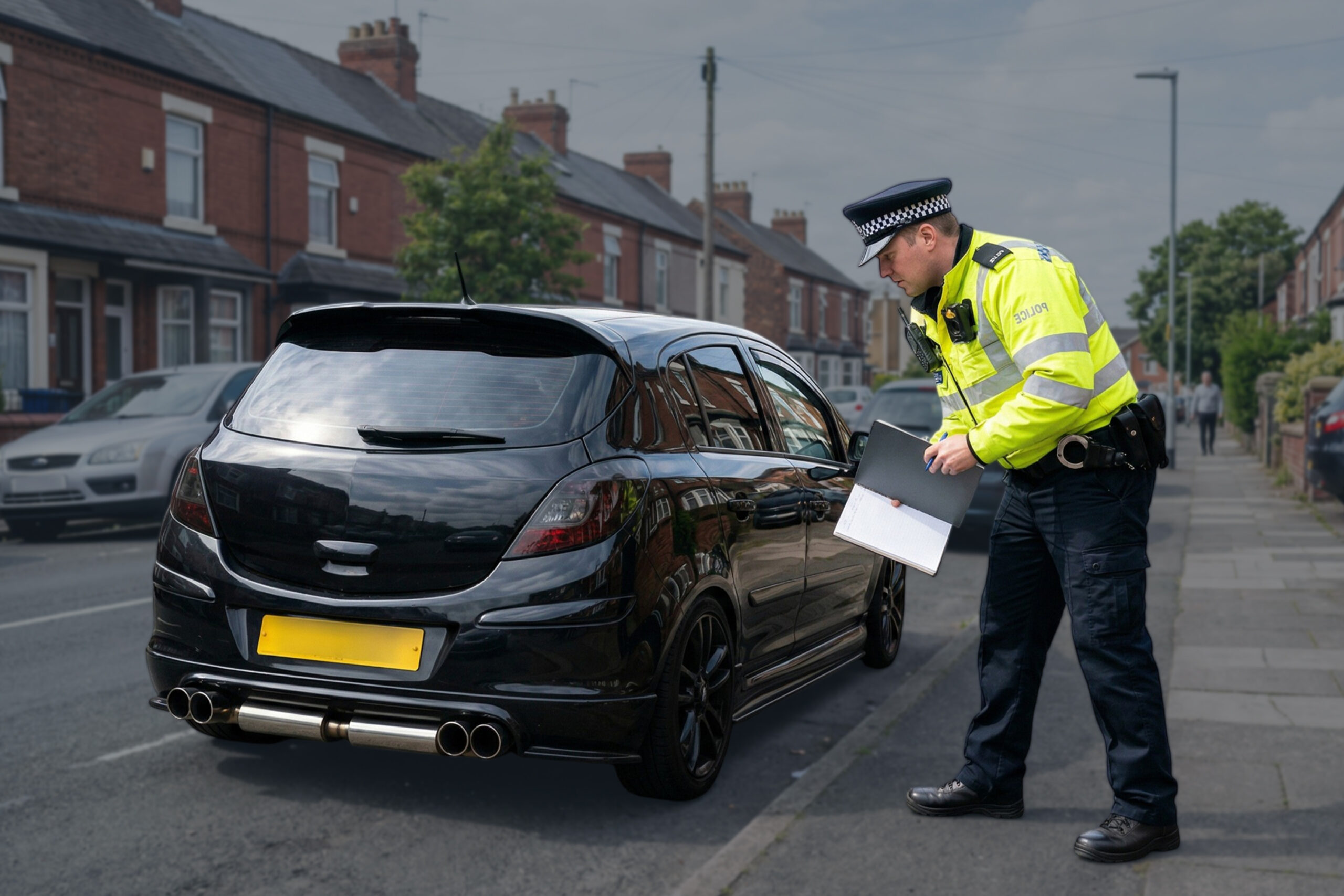
Police officers have powers to stop vehicles suspected of breaching road traffic laws.
Modified vehicles may be inspected for:
- Excessive noise
- Illegal lighting
- Unsafe mechanical alterations
- Illegal window tinting
If officers believe a vehicle is dangerous or unlawful, they may issue:
- Vehicle defect rectification notices
- Fixed penalty notices
- Prohibition notices preventing further use
In more serious cases, drivers may be prosecuted in court.
Penalties for Illegal Car Modifications
Penalties vary depending on the offence.
Possible consequences include:
- Fines
- Penalty points
- Vehicle prohibition notices
- Requirement to remove modifications
- Prosecution for dangerous vehicle offences
In more serious situations particularly where a vehicle is considered unsafe the driver may face more significant legal consequences.
Facing a legal case?
Regain peace of mind and balance in your life by contacting us now for a consultation with our Motoring Offences specialist.
Strictly Confidential and No Obligation
When to Seek Legal Advice
Drivers may require legal advice if they are:
- Accused of driving a dangerous vehicle
- Facing prosecution linked to vehicle modifications
- Investigated following a police stop
- Accused of insurance offences connected to modifications
Motoring offences can carry significant consequences including penalty points, disqualification and criminal convictions.
Obtaining legal advice at an early stage can help drivers understand their position and potential defence options.
Speak to a Motoring Offence Defence Solicitor
If you are facing investigation or prosecution related to vehicle modifications, obtaining legal advice is essential.
Motoring offences can carry serious consequences including penalty points, fines and disqualification from driving.
Our criminal defence solicitors regularly advise clients facing allegations connected to vehicle offences and provide clear guidance on the legal options available.
If you require advice regarding a motoring offence investigation, contact our team to discuss your situation.
5 Key Takeaways
- Many car modifications are legal if they comply with vehicle safety regulations
- Certain modifications can make a vehicle illegal to drive on UK roads
- Drivers may need to notify the DVLA and their insurer about modifications
- Police can stop and inspect modified vehicles suspected of breaking the law
- Illegal modifications can result in fines, penalty points or prosecution
Frequently Asked Questions
No. Many car modifications are legal if they comply with vehicle safety regulations and do not make the vehicle unsafe or unroadworthy.
Some modifications must be reported to the DVLA, particularly if they affect vehicle identification details such as engine size or fuel type.
Exhaust systems that produce excessive noise beyond the standard level may breach vehicle construction regulations.
Tinted windows are legal only if they meet minimum visibility requirements set by UK law.
Yes. Drivers can receive fines, defect notices or penalty points if modifications breach legal requirements.
Yes. Police can stop and inspect vehicles suspected of breaking road traffic laws.
Call us on 0333 009 6275. We are available to take your call 24 hours a day, 7 days a week.
You can also email us on enquiries@ashmanssolicitors.com or complete our Online Enquiry Form and we’ll be in touch soon.
Get in touch
We’ll respond within 15 minutes during office hours
Search our legal articles
Free expert guidance on criminal law, your rights, and what to expect at every stage.
Searching Legal Help Hub articles
Related insights and updates

Drunk in Charge vs Drink Driving UK: What’s the Legal Difference?

Failing to Provide a Specimen for Analysis – Legal Advice

Drink Driving and Drug Driving Penalties in the UK

Caught Drink Driving in the UK: What Happens Next?

Using a Mobile Phone While Driving in the UK: Law, Penalties and Legal Defence

Mobile Phone Driving Law in the UK: Rules, Penalties and Legal Defences

Totting Up Ban Explained: What Happens If You Reach 12 Penalty Points?

Taking Penalty Points for Someone Else: Is It Perverting the Course of Justice?

What Happens If Your Licence Is Revoked as a New Driver in the UK?
Motoring Offence Convictions in the UK: What You Need to Know

Common Motoring Law Myths in the UK Explained
Mobile Phone Driving Laws in the UK: Rules, Penalties and Legal Defences

How to Report a Road Traffic Accident in the UK

Hip Flask Defence in Drink Driving Cases

Failure to Stop After an Accident in the UK: Law, Penalties and Legal Defence
Fail to Produce Driving Documents: Offence, Penalties and Legal Defence

Drug Driving UK: Legal Limits, Penalties and Defences

Driving Without Insurance UK Penalties: Fines, Points and Court Consequences

Driving Whilst Disqualified in the UK: Penalties, Court Process and Legal Defences