

Legal Help Hub
How to Appeal a Driving Ban in the UK






Introduction
Receiving a driving ban can have a serious impact on your daily life, employment, and personal responsibilities. A disqualification from driving may prevent you from travelling to work, caring for family members, or maintaining your business commitments.
In certain circumstances, however, it may be possible to appeal a driving ban in the UK. The law provides several routes to challenge a disqualification imposed by the Magistrates’ Court, particularly where there has been an error, new evidence has emerged, or the sentence imposed is considered excessive.
Understanding the appeal process and the strict time limits involved is essential before taking action.
What Is a Driving Ban in the UK?
A driving ban, also referred to as a driving disqualification, is a penalty imposed by a criminal court for certain motoring offences.
Common offences that may result in disqualification include:
- Drink driving
- Dangerous driving
- Driving without insurance
- Accumulating 12 or more penalty points (totting up)
- Excessive speeding
Disqualification periods can vary significantly depending on the seriousness of the offence and the driver’s history.
In some cases, a ban may last several months, while more serious offences may result in multi-year disqualifications.
Can You Appeal a Driving Disqualification?
Yes, it may be possible to appeal a driving ban in the UK. However, appeals are only successful where there are valid legal grounds.
The right to appeal typically arises where:
- The conviction is disputed
- The sentence imposed is considered excessive
- There was a procedural error in court
- New evidence becomes available
Appeals from the Magistrates’ Court are usually heard in the Crown Court, where the case may be reconsidered.

Legal Grounds for Appealing a Driving Ban
An appeal must be based on recognised legal grounds. Simply disagreeing with the decision is usually not sufficient.
Legal Error
One possible ground for appeal is where the Magistrates’ Court made a mistake in law or procedure.
For example:
- Incorrect sentencing approach
- Failure to consider relevant evidence
- Misapplication of sentencing guidelines
The Sentencing Council’s motoring offence guidelines outline how courts should determine disqualification periods.
New Evidence
An appeal may also be possible if new and relevant evidence becomes available after the hearing.
This evidence must be:
- Credible
- Relevant to the case
- Capable of affecting the outcome
The Crown Court will consider whether the evidence could reasonably have changed the original decision.
Appeal Against Sentence
If you pleaded guilty but believe the disqualification period is unduly harsh, you may appeal the sentence.
The appeal court will assess whether the penalty imposed was proportionate to the offence.
Ways to Appeal a Driving Ban in England and Wales
There are several legal routes that may be available depending on the circumstances of your case.
Appeal to the Crown Court
The most common route is a direct appeal from the Magistrates’ Court to the Crown Court.
This type of appeal involves:
- Filing a Notice of Appeal within 21 days
- Preparing legal arguments
- Attending a Crown Court hearing
The Crown Court judge may reconsider the evidence and sentencing decision.
Statutory Declaration
If you were convicted in your absence without knowledge of the proceedings, you may be able to submit a Statutory Declaration.
This is a formal statement confirming that you were unaware of the case.
If accepted, the conviction may be set aside and the case reopened.
Application to Reopen a Case
Under certain circumstances, it may be possible to request that the Magistrates’ Court reopen the case.
This may occur where:
- Important information was not available at the original hearing
- The defendant was unable to attend for a valid reason
- The court made a procedural error
The court will decide whether it is in the interests of justice to reconsider the matter.
Time Limits for Appealing a Driving Ban
Strict deadlines apply to driving ban appeals.
In most cases:
- The Notice of Appeal must be filed within 21 days of sentencing
Missing this deadline can significantly limit your options.
Because of the short time limit, it is advisable to seek legal advice as soon as possible after a ban is imposed.
Facing a legal case?
Regain peace of mind and balance in your life by contacting us now for a consultation with our Motoring Offences Specialist.
Strictly Confidential and No Obligation
What Happens During a Driving Ban Appeal?
If an appeal proceeds to the Crown Court, the court will examine the circumstances of the case.
The process typically involves:
- Reviewing the original Magistrates’ Court decision
- Considering legal arguments presented by the defence
- Assessing whether the conviction or sentence should stand
The Crown Court judge may hear evidence again or review the case based on legal submissions.
Possible Outcomes of an Appeal
There are several possible outcomes when appealing a driving ban.
The court may:
- Uphold the original disqualification
- Reduce the length of the ban
- Overturn the disqualification entirely
In rare circumstances, the court may decide that the original sentence was too lenient and increase the disqualification period.
Risks of Appealing a Driving Ban
Before pursuing an appeal, it is important to understand the potential risks.
If an appeal is unsuccessful:
- the original disqualification may remain in place
- the court may impose additional penalties
- the disqualification period could be increased
A careful assessment of the case is therefore essential before proceeding.
Speak to a Motoring Defence Solicitor
Appealing a driving ban requires a clear understanding of criminal procedure, sentencing law, and motoring legislation.
An experienced motoring defence solicitor can:
- Review the circumstances of your conviction
- Assess whether valid grounds for appeal exist
- Prepare legal submissions
- Represent you in court
If you have received a driving disqualification and wish to explore whether an appeal may be possible, seeking legal advice at the earliest opportunity can help you understand your options.
5 Key Takeaways
- A driving ban is formally known as a driving disqualification imposed by a court.
- You usually have 21 days to lodge an appeal after sentencing.
- Appeals against Magistrates’ Court decisions are typically heard in the Crown Court.
- The court may uphold, reduce, or overturn the disqualification.
- In some cases, the court has the power to increase the sentence if the appeal fails.
Frequently Asked Questions
Yes. A driving ban imposed by the Magistrates’ Court can usually be appealed to the Crown Court within 21 days.
You typically have 21 days from the date of sentencing to file a Notice of Appeal.
Yes, if the appeal court finds legal errors, new evidence, or that the sentence was excessive.
Yes. In some circumstances the Crown Court may increase the sentence if it believes the original penalty was too lenient.
A statutory declaration allows a conviction to be set aside if the defendant was unaware of the proceedings.
Yes. You may appeal the sentence if you believe the disqualification imposed was too severe.
Usually the disqualification remains in effect unless the court orders otherwise.
Call us on 0333 009 6275. We are available to take your call 24 hours a day, 7 days a week.
You can also email us on enquiries@ashmanssolicitors.com or complete our Online Enquiry Form and we’ll be in touch soon.
Get in touch
We’ll respond within 15 minutes during office hours
Search our legal articles
Free expert guidance on criminal law, your rights, and what to expect at every stage.
Searching Legal Help Hub articles
Related insights and updates

Drunk in Charge vs Drink Driving UK: What’s the Legal Difference?

Failing to Provide a Specimen for Analysis – Legal Advice

Drink Driving and Drug Driving Penalties in the UK

Caught Drink Driving in the UK: What Happens Next?

Using a Mobile Phone While Driving in the UK: Law, Penalties and Legal Defence

Mobile Phone Driving Law in the UK: Rules, Penalties and Legal Defences

Totting Up Ban Explained: What Happens If You Reach 12 Penalty Points?

Taking Penalty Points for Someone Else: Is It Perverting the Course of Justice?

What Happens If Your Licence Is Revoked as a New Driver in the UK?

Motoring Offence Convictions in the UK: What You Need to Know

Common Motoring Law Myths in the UK Explained

Mobile Phone Driving Laws in the UK: Rules, Penalties and Legal Defences

How to Report a Road Traffic Accident in the UK

Hip Flask Defence in Drink Driving Cases

Failure to Stop After an Accident in the UK: Law, Penalties and Legal Defence
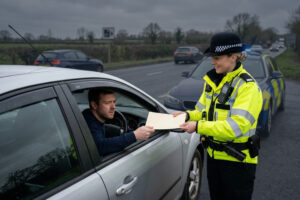
Fail to Produce Driving Documents: Offence, Penalties and Legal Defence

Drug Driving UK: Legal Limits, Penalties and Defences

Driving Without Insurance UK Penalties: Fines, Points and Court Consequences

Driving Whilst Disqualified in the UK: Penalties, Court Process and Legal Defences